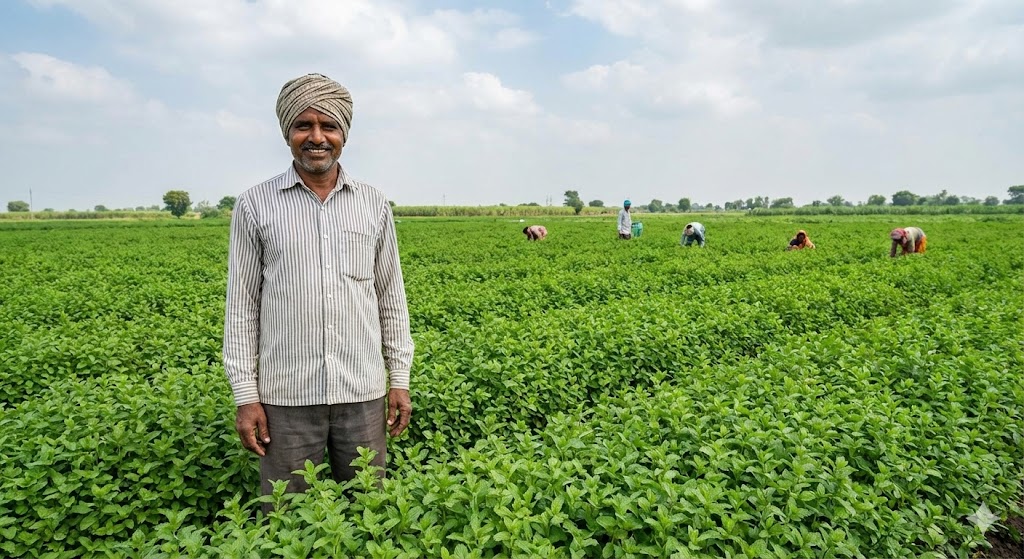
For decades, Mentha (Mentha arvensis) has been the "Green Gold" of Uttar Pradesh, but 2025 is shaping up to be a pivotal year for Indian mint farmers. India currently commands over 80% of the global natural menthol market, yet recent trends show a tightening supply chain that every stakeholder needs to watch.
The biggest news shaking up the industry is the recent policy shift regarding HSN codes. In late 2024, the government finally separated the trade codes for "natural" and "synthetic" menthol. This is a game-changer for farmers. Previously, cheaper synthetic imports often undercut domestic natural produce. This new clarity is expected to fetch better premiums for the pure, farm-grown crystals that Indian soil produces best.
However, challenges remain. Reports from major hubs like Barabanki and Sambhal indicate a dip in acreage this season. Many farmers have rotated crops to maize or sugarcane due to erratic weather patterns and rising input costs. With production estimates lower than usual and global demand from the pharmaceutical and FMCG sectors projected to grow by over 11% annually through 2029, we are likely looking at a price surge in the coming quarters.
For the farmer standing in that green field, the message is clear: Quality is king. With the government now distinguishing natural purity from synthetic alternatives, those sticking to high-yield varieties like CIM-Kranti are positioned to reap significant rewards in the 2025 harvest cycle.