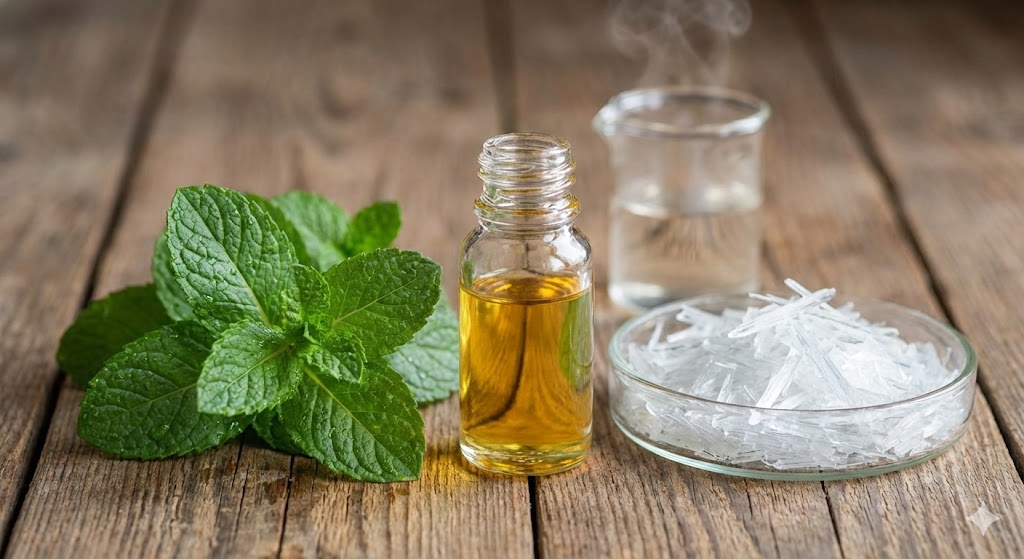
We all know that distinct, icy sensation—whether it’s in your toothpaste, your pain-relief balm, or your favorite chewing gum. But very few people realize the intricate journey that natural menthol takes to get there. It isn't just chemistry; it is an agricultural art form that bridges traditional farming with modern distillation.
The journey begins in the heat of the Indian summer. Mentha arvensis, or Japanese Mint, is harvested just as the plants begin to bloom, which is when the oil content in the leaves is at its peak. Farmers must act quickly; the harvested leaves are semi-dried in the fields to reduce moisture before being packed into distillation tanks.
Through steam distillation, the essential oil is extracted—a golden liquid that smells intensely of fresh mint. But the magic happens in the next step: Crystallization. The oil is chilled to extremely low temperatures, causing the pure menthol to separate from the oil and form beautiful, translucent crystals.
While synthetic menthol is available in the market today, it often lacks the complexity and therapeutic depth of the natural product. Natural menthol is prized not just for its flavor, but for its medicinal ability to trigger the cold-sensitive receptors in our skin (TRPM8 receptors), providing genuine pain relief and cooling without actually lowering temperature. From the hot fields of North India to the cooling sensation in your home, the journey of the Mentha leaf is a testament to nature's potency.